How Does Reflexology Work?
Reflexologists postulate that reflexology helps release stress, which in turn helps the body heal and regenerate itself. There are several theories about how this process works.
Theory #1: Reflexology works with the central nervous system.
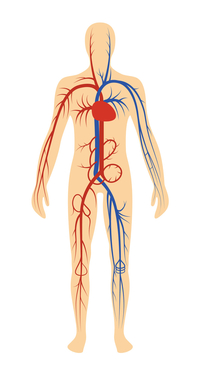 This theory builds on research done in the 1890s by Sir Henry Head and Sir Charles Sherrington, who began to show through their research that a neurological relationship exists between the skin and the internal organs, and that the whole nervous system adjusts to a stimulus.
According to the theory, the reflexologist's application of pressure to feet, hands, or ears sends a calming message from the peripheral nerves in these extremities to the central nervous system, which in turn signals the body to adjust the tension level. This enhances overall relaxation, brings internal organs and their systems into a state of optimum functioning, and increases blood supply (which brings additional oxygen and nutrients to cells and enhances waste removal). It positively affects the circulatory, respiratory, endocrine, immune, and neuropeptide systems in the body.
Theory #2: Reflexology reduces pain by reducing stress and improving mood.
Another theory that may also explain how reflexology can produce pain relief is the gate control theory, or, more recently, the neuromatrix theory of pain. This theory suggests that pain is a subjective experience created by your brain. The brain does this in response to the sensory experience of pain, but it can also work independently of sensory input and create pain in response to emotional or cognitive factors. Thus things that influence the brain, such as your mood or external factors like stress can also affect your experience of pain. According to this theory, reflexology may reduce pain by reducing stress and improving mood.
Theory #3: Reflexology keeps the body’s “vital energy” flowing.
Learn about qi and other conceptsAnother theory that may also explain how reflexology can produce pain relief is the gate control theory, or, more recently, the neuromatrix theory of pain. This theory suggests that pain is a subjective experience created by your brain. The brain does this in response to the sensory experience of pain, but it can also work independently of sensory input and create pain in response to emotional or cognitive factors. Thus things that influence the brain, such as your mood or external factors like stress can also affect your experience of pain. According to this theory, reflexology may reduce pain by reducing stress and improving mood.
Yet another theory holds that there is a "vital energy" in the human body. If stress is not addressed, it leads to congestion of energy, which in turn causes bodily inefficiencies, which can lead to illness. According to this theory, reflexology helps keep the energy flowing.
Theory #4: Zone theory
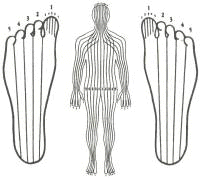 The recognition of reflexology as a specific type of treatment began with Zone Theory, in which the body is divided into 10 vertical zones. Each zone corresponds to fingers and toes all the way up to the top of the head. For example, if you are standing up with your hands on your thighs (palms facing down) the thumbs and great toe would be zone 1. On either side of the body, the index finger and second toe would be zone 2, etc.
In reflexology theory, every organ, valve, muscle, etc. that lies within a zone can be accessed via a point or area on the feet or hands. For example, working between toes 2 and 3, or fingers 2 and 3, the eye point is found. These pathways between pressure points and other parts of the body are thought to be connected via the nervous system, as described above.
The zones are similar to, but not the same as meridians found in Chinese medicine. However, there are some correlations between meridians and location of organs on the feet and ankles.
Guiding principles of reflexology
What's the difference between reflexology and massage?
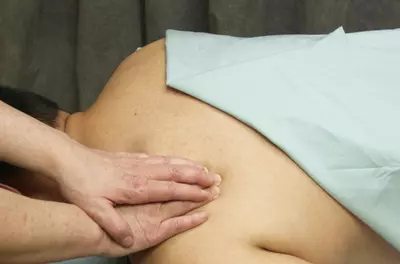
Massage
Massage is the systematic manipulation of the soft tissues of the body, using specific techniques (for example, tapping, kneading, stroking, and friction) to relax the muscles.
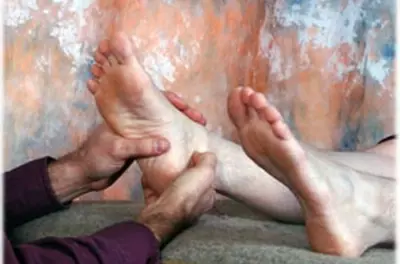
Reflexology
Reflexology focuses on reflex maps of points and areas of the body in the feet, hands, and ears using unique micromovement techniques, such as thumb or finger walking, with the goal of creating a response throughout the body.
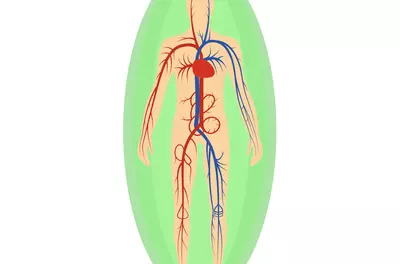
In short
Massage therapists work "from the outside in," manipulating specific muscle groups or fascia to release tension. Reflexology practitioners see themselves as working "from the inside out"—stimulating the nervous system to release tension.
Another difference between massage and reflexology is that a client will stay fully clothed for a reflexology session except for removing footwear, whereas clients remove clothing for a massage session.
What’s the difference between reflexology, acupressure, and acupuncture?
Reflexology is similar to acupuncture and acupressure in that it theorizes an influence on the body's vital energy through the stimulation of points on the body. However, acupuncture/acupressure points do not always coincide with the reflex points used in reflexology.
Reflexology and acupressure are both "reflex" therapies in that they work with points on one part of the body to affect other parts of the body. While reflexology uses reflexes that are in an orderly arrangement resembling a shape of the human body on the feet, hands, and outer ears, acupressure uses over 800 reflex points that are found along long thin energy lines called meridians that run the length of the entire body.
F. Cervero. (1985). Philosophical Transactions of the Royal Society of London. Series B. Biological Sciences. Nociception and Pain. 308(1136), 325-337.
Fitzgerald, Wm. H. and Edwin F. Bowers. (1918). Zone Therapy; or, Relieving Pain at Home. Columbus, O., I. W. Long.
H. Head, (1893) On the disturbances of sensation, with special references to the pain of visceral disease. Brain. 16:1-133; 1894, 17: 339-480; 1896, 19: 153-276.
Stephenson, N. L. N., Swanson, M., Dalton, J., Keefe, F. J., & Engelke, M. (2007). Partner-Delivered Reflexology: Effects on Cancer Pain and Anxiety. Oncology Nursing Forum, 34(1), 127-132.