Finding Sanctuary: A Guide to Restoring Your Spirit in Nature
"Nature is not a luxury; it is a necessity for the human spirit."
In times of community unrest, fear, and grief, our minds and bodies often enter a state of high alert. When this happens, we can use the science of nature-based therapeutics to help move from a place of "vigilance" to a place of "restoration."
Try using the frameworks and practices below to shift your mind and body to a place of restoration. After trying out some of the practices, reflect on how you feel? Do you feel calmer and ready to tackle challenging problems?

Restore Your Focus
When the world feels overwhelming, our "directed attention" becomes exhausted. This leads to irritability and mental fatigue.
Using the "soft fascination" method developed the Kaplans (known as the Kaplan Method), seek out small delightful sights in nature. Watch the way snow falls, the movement of a bird, or the patterns of clouds. These sights capture your attention effortlessly, allowing your tired mind to rest and recover.Seek a New Perspective
Research shows that simply viewing green spaces can lower your heart rate and cortisol levels (Stress Reduction Theory set forth by Roger Ulrich). To try this out
find a "Room with a View" at a local green space like a park, waterfront or a curated space like a conservatory or arboretum. If you aren't able to be outside, sit in by a window. Allow your eyes to settle on the horizon or the structure of the trees. Let the visual stability of the landscape remind your nervous system that safety is possible.Connect Through Your Senses, also known as the 5 Pathways to Nature Connection
Based on the work of Miles Richardson, we know that "connection" is more than just being outside—it’s an active engagement. Engage with your immediate environment to cultivate sensory awareness and emotional clarity.
- Senses: Stop and listen to the wind. Feel the texture of a tree or the cold air on your cheeks.
- Beauty: Find one thing—even something small—that you find beautiful today.
- Emotion: Allow yourself to feel what you feel. The land is big enough to hold your grief and your fear.
Remember Your Roots
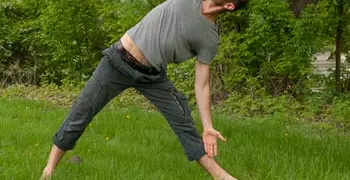
Biophilia is our innate, biological bond with the living world. Rooted in our evolutionary bond with nature, biophilia emphasizes that our wellbeing is tied to the environment. To leverage this connection, transition into natural settings for mindful movement. By focusing on sensory input and direct contact with the earth, you can enhance cognitive restoration and emotional grounding.
You are not separate from nature; you are a part of it. To tap into this, go for a walk outside. Walk slowly. Feel your feet on the earth. Remind yourself: "I belong here. I am supported by the same earth that supports these ancient trees."
Content development of the original flyer this article is adapted from was led by the Content Expertise of our Nature-Based Therapeutic Services (Est. 1992)